
What is El Niño, how does it affect hunger and how does WFP respond?
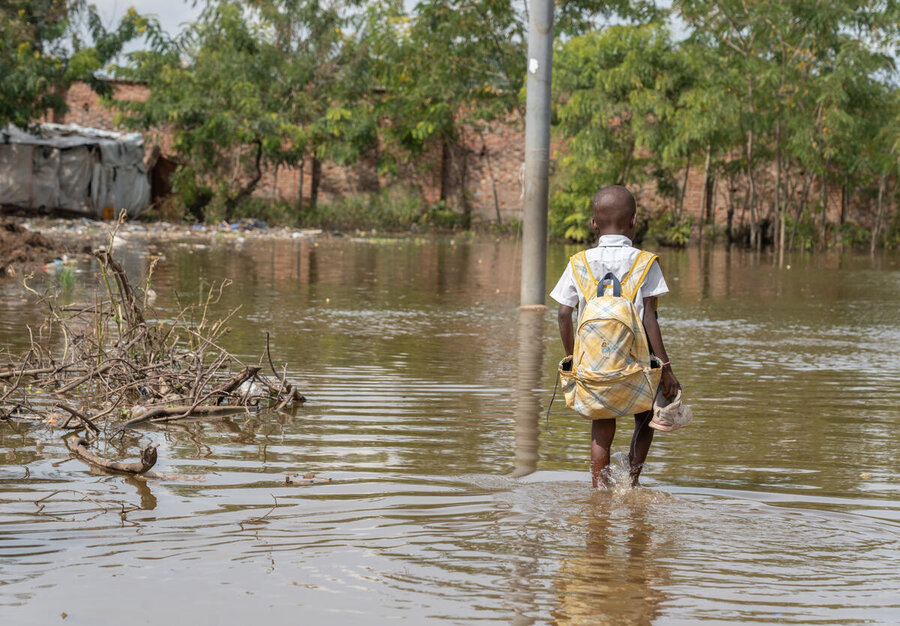
El Niño is one of the most powerful drivers of global weather, climate conditions and hunger. El Niño is firmly established and strengthening, with forecasts indicating it could become one of the strongest events on record. It is expected to peak between October and December 2026, with impacts likely to continue through 2027 and into early 2028. New WFP analysis suggests it could significantly worsen food insecurity in at least 45 countries.
What is El Niño and how can it become a food security crisis?
El Niño is the warm phase of the El Niño–Southern Oscillation (ENSO), a natural climate pattern that shifts global weather patterns and increases the risks of floods, droughts, storms, fires and heatwaves worldwide.
El Niño can bring drought to some regions and severe flooding to others – and in some cases both. These extremes damage crops, livestock and infrastructure, reducing food production and disrupting markets. As supply falls, prices rise and food becomes less affordable – especially for smallholder farmers and pastoralists who rely on rainfall. When combined with existing pressures such as conflict these climate shocks can quickly increase hunger.
El Niño can also affect major global food-producing regions, with impacts on supply and prices that extend beyond affected areas – multiplying food security risks.
What is the difference between El Niño and La Niña?
El Niño and La Niña are opposite phases of the same ENSO cycle.
- El Niño is the warm phase, when ocean temperatures rise and disrupt rainfall patterns, often bringing drought in some regions and heavier rains in others
- La Niña is the cool phase, when ocean temperatures fall and shift weather patterns in different – but still often extreme – ways, often bringing flooding in some regions and drought elsewhere
They do not happen at different times of the year. Instead, they alternate within the same cycle and typically develop during the year, peak towards the end of the year, and influence weather patterns for several months.
Both phases can affect agriculture, water availability and food security – and both have been linked to past food crises.
Why is this year’s El Niño especially alarming?
Expert forecasts show the current and already strong El Niño is steadily intensifying – potentially becoming among the strongest on record – and expected to peak between October and December 2026. In many areas, its effects will likely be felt well into 2027 and beyond, due to its impact on future harvest cycles.
In media and public discussions, exceptionally intense El Niño episodes are sometimes referred to as "super El Niño" events, because of their potential to amplify droughts, floods and other weather extremes across multiple regions simultaneously. WFP analysis shows El Niño is set to sharply increase hunger in some of the world’s most vulnerable countries. WFP estimates that this El Niño could push at least 49 million additional people into acute food insecurity by the end of 2027, representing a 22 percent increase from 225 million people to 274 million people facing acute hunger.
These forecasts – along with lessons learnt from previous El Ninos – are critical because they allow governments and humanitarian organizations like WFP to act early – before drought, floods or failed harvests begin to affect food production and incomes.
Where is El Niño likely to hit food security the hardest?
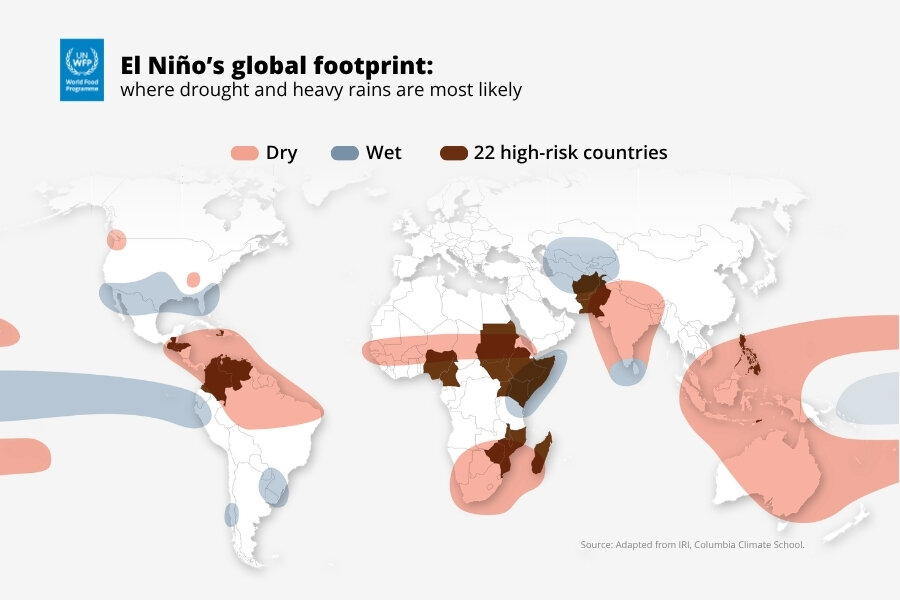
WFP analysis shows countries already grappling with poverty, economic instability and repeated weather extremes will likely be hardest hit by El Niño – but its impact will not be felt uniformly. Some countries are already feeling the fallout – such as below-average rainfall, flooding or unusually high temperatures – while others are expected to feel the effects later on. Many at-risk communities rely on rain-fed agriculture and have limited capacity to absorb shocks – meaning even small disruptions can quickly affect food availability and access.
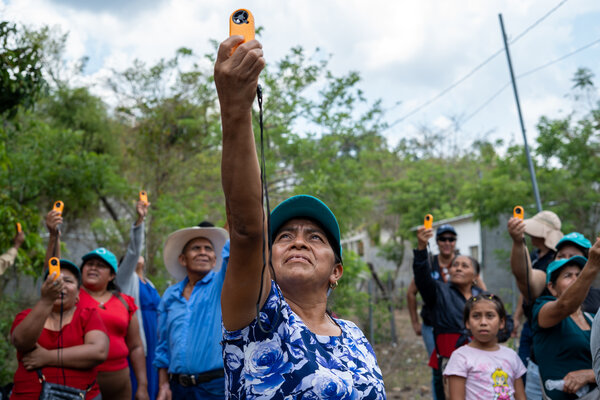
- Latin America and the Caribbean is expected to see drier-than-average conditions, and potentially some of the most dramatic hikes in food insecurity – it could surge nearly 50 percent regionally and affect up to 16 million additional people, with the Dry Corridor potentially experiencing an increase of more than 80 percent in acute food insecurity.
- East and southern Africa could also see deteriorating food insecurity for more than 18 million people, up by more than one-quarter. Southern Africa is especially vulnerable because millions of households depend on rain-fed subsistence agriculture, while parts of the Horn of Africa face increasing flood risk.
- Asia and the Pacific similarly risk a strong El Niño backlash, potentially pushing an additional 8.2 million people into acute hunger.
- West and Central Africa, with a mixed forecast of both drought and wetter-than-normal conditions depending on affected countries, is projected to see food insecurity affect an additional 7.4 million people.
- Middle East and North Africa could see El Niño intensify pressure on food systems already strained by conflict and economic pressures, with more than 33 million people already facing hunger.
What does WFP do before El Niño turns into a hunger emergency?
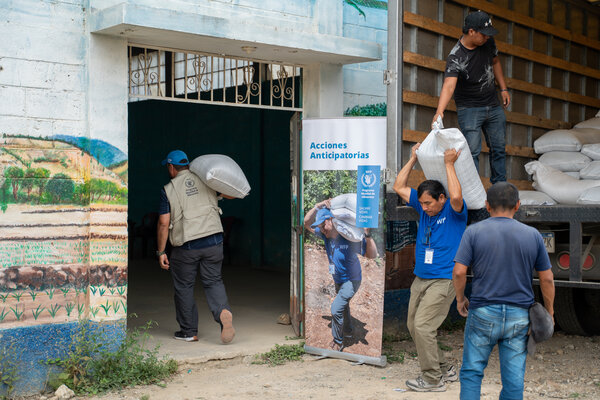
WFP focuses on an approach known as Anticipatory Action, taking steps before a crisis unfolds. We use climate forecasts and early-warning systems, providing cash assistance, food support and early-warning messages to communities. Other measures include strengthening water systems, including irrigation and flood protection, and disaster risk financing including savings, loans and insurance.
WFP has already triggered anticipatory action plans across 15 countries in Latin America, Africa and Asia – including Chad, Honduras, Madagascar, Malawi, Pakistan and Uganda – reaching more than 28 million people with early-warning information and anticipatory assistance.
Support includes WFP scaling pre-arranged financing mechanisms such as disaster risk insurance, credit and digital payments, to make more money available at lower cost. Additional activations are planned as El Niño intensifies.
How does acting early cost less than responding late?
Anticipatory actions save lives, time and money. Evidence shows that every US$1 invested can generate up to US$7 in avoided humanitarian losses. In Southern Africa, conservative estimates from the 2023–2024 El Niño-induced drought indicate that investments in anticipatory actions yielded assisted populations a 30-percent net benefit over traditional response. Early action helps protect crops, livestock and incomes – reducing the need for costly emergency assistance and long recovery periods.
Acting early also helps avoid inflation, food shortages and post disaster debt. Pre-crisis prices are lower than crisis prices, for example procuring animal feed before flooding is 15 percent cheaper in Bangladesh than during a flood.
This is why WFP and its sister agency the Food and Agriculture Organization issued an appeal for anticipatory action at scale in June 2026, seeking to protect nearly 9 million people from the potential impact of a strong El Niño across 22 countries.
Why is WFP well positioned to handle an emergency such as El Niño?
WFP combines global reach, expertise in early-warning systems and our operational scale to respond to food crises – before and after they hit. We further support governments in strengthening preparedness and response systems.
This is particularly important for El Niño, where predictable climate risks mean we can take preemptive measures.
During the 2023–2024 El Niño, WFP and partners reached millions of people with early support, including in drought-affected areas of Southern Africa. This helped families protect crops and livestock, maintain food consumption and reduce losses as conditions worsened.